


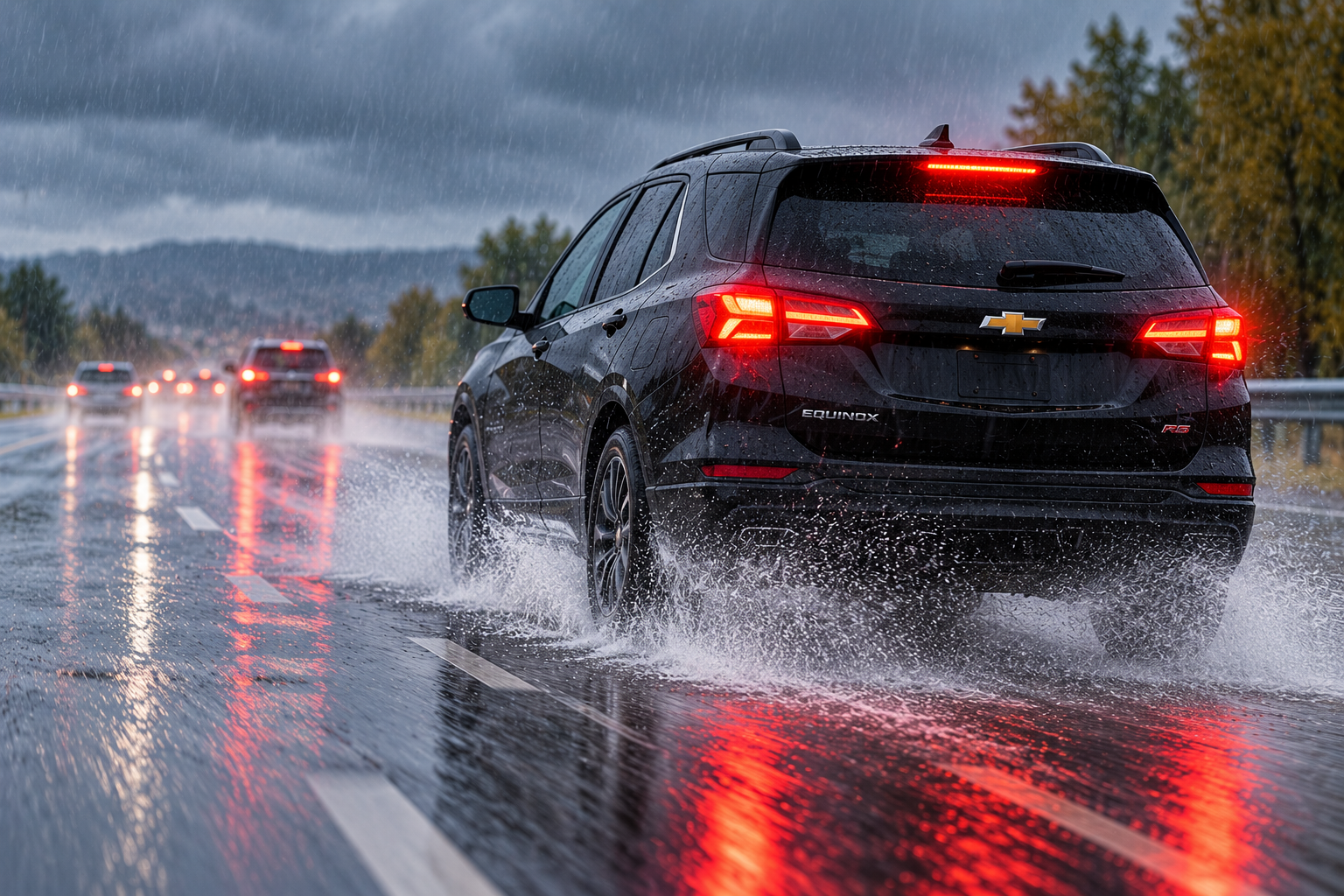
If you have ever noticed that your brakes feel different in rain compared to dry conditions, you are not imagining it. Wet roads genuinely change how your braking system performs and how quickly your vehicle stops. This is especially true for Tri-Cities and Yakima Valley drivers who experience long dry summers followed by wet fall conditions. Here is everything Prosser area drivers need to know about wet road braking in the Tri-Cities, WA and how to stay safe this fall season.
Why the First Rain in the Tri-Cities Is the Slickest
Eastern Washington experiences some of the longest and driest summers in the Pacific Northwest. Kennewick, Richland, and Pasco roads accumulate months of built-up oils, rubber deposits, tire dust, and agricultural debris during the dry summer season. When the first significant fall rain arrives, it mixes with all of that accumulated surface grime on the road. That mixture of water and accumulated oils creates an extremely slippery film on the road surface. This oily film is significantly more slippery than roads that have been regularly rinsed by frequent rain throughout the season.
Here is why the first fall rain in the Tri-Cities is especially dangerous for every driver:
- Months of engine oil drips, fuel spills, and rubber deposits have built up on road surfaces
- The first rain activates and suspends all of that accumulated grime in a slippery film
- Roads that look wet may actually be coated in an oily mixture that dramatically reduces traction
- Intersections, turn lanes, and areas with heavy traffic accumulation are especially slippery
- This oily film typically washes away after a prolonged period of steady rainfall
- Experienced Tri-Cities drivers know to be extra cautious during the very first fall rain events
5 Reasons Your Brakes Feel Different on Wet Roads
Here are the five most important reasons your brakes feel different in rain and on wet Tri-Cities roads:
1. Reduced Friction Between Tires and Road
Braking effectiveness depends entirely on the friction between your tires and the road surface. Water on the road surface acts as a lubricant that significantly reduces available friction during braking. Less friction means longer stopping distances and a noticeably different brake pedal feel during wet road braking. The reduction in friction is most dramatic during the first fall rains when accumulated road oils mix with water on Tri-Cities road surfaces.
2. Water on Your Brake Rotors and Pads
When you drive through water, your brake rotors and brake pads get wet just like the road surface beneath your tires. Water temporarily reduces the coefficient of friction between your brake pads and rotors during braking. This can cause your brakes to feel less responsive or even slightly grabby immediately after driving through a puddle or during heavy rain. The effect is usually temporary and your brakes typically return to normal feel after a few gentle applications that dry the rotor surface.
3. Brake Fade From Humidity
Extended periods of high humidity and wet weather can gradually reduce your brake pad's grip on the rotor surface over time. This phenomenon is known as moisture-related brake fade and is more pronounced in brake pads and rotors that are significantly worn. Fresh brake pads and properly maintained rotors are much less susceptible to moisture-related brake fade than worn brake components. Our Chevrolet brake repair team at Speck Chevrolet of Prosser can inspect your brake components and recommend replacement if needed.
4. Reduced Tire Traction
Your brakes can only slow your vehicle as effectively as your tires can grip the road surface beneath them. Wet roads dramatically reduce the traction available from your tires regardless of how well your brakes are functioning. Worn tires with shallow tread depth are significantly less effective at maintaining traction during wet road braking events. The combination of worn tires and wet roads creates the most dangerous braking conditions any Tri-Cities driver can face on local streets and highways.
5. ABS Activating More Frequently
Your vehicle's Anti-Lock Braking System activates when it detects wheel lockup during braking. ABS activates significantly more frequently during wet road braking because wheels reach their traction limit much sooner on a slippery surface. When ABS activates you will feel a pulsing or vibrating sensation through the brake pedal that is completely normal and expected. Do not release the brake pedal when you feel ABS activating as the system is designed to maintain steering control during hard wet road braking events.
Tips for Braking Safely on Wet Roads in the Tri-Cities, WA
Here are our top wet road braking tips for Prosser and Tri-Cities drivers during fall and winter driving conditions:
Increase Your Following Distance
Wet roads dramatically increase your stopping distance compared to dry conditions. Most driving experts recommend doubling or tripling your normal following distance during wet road conditions in the Tri-Cities area. A larger following distance gives you more time to react and brake gradually before reaching the vehicle ahead.
Brake Earlier and More Gradually
Begin braking significantly earlier than you normally would on dry roads when approaching intersections, stop signs, and traffic slowdowns. Gradual and progressive brake application is significantly more effective than sudden hard braking on wet road surfaces. Early and smooth braking gives your tires the maximum possible time to maintain traction during the stop.
Avoid Sudden Hard Stops
Sudden hard braking on wet roads can cause wheel lockup or ABS activation that extends your stopping distance. Smooth and controlled brake applications keep your tires at maximum traction during wet road stops. If you must stop suddenly, apply firm and steady brake pressure and let your ABS system manage wheel traction automatically.
Dry Your Brakes After Driving Through Water
After driving through a significant puddle or flooded road section, apply your brakes gently a few times at low speed. Those gentle applications generate heat that helps dry your rotors and brake pads quickly. Dried rotors and pads restore normal brake pedal feel and braking effectiveness within a few seconds of gentle application.
Watch for Standing Water and Puddles
Avoid driving through standing water whenever safely possible on Tri-Cities roads. Even shallow standing water can temporarily affect your braking effectiveness and increase your hydroplaning risk significantly. Intersections, road edges, and low spots on Kennewick, Richland, and Pasco roads are the most common locations for dangerous puddle accumulation during fall rain events.
Slow Down Before Turning
Reduce your speed before entering any turn during wet road conditions rather than braking while in the turn. Braking while cornering on a wet road significantly reduces both your braking and steering effectiveness simultaneously. Complete your braking before the turn and carry a smooth and controlled speed through the corner for maximum safety.
Check Your Tires Regularly
Your tires are your most important wet weather safety asset on every drive. Check your tread depth and tire pressure regularly throughout fall and winter driving seasons. Replace tires when tread depth approaches 4/32 inch for maximum wet road braking performance on Tri-Cities and Yakima Valley roads.
Signs Your Brakes Need Service Before Wet Season
Before wet fall driving conditions arrive in Prosser and the Tri-Cities, watch for these warning signs that your brakes need professional attention:
- Squealing or grinding sounds when applying the brakes during normal driving
- Brake pedal that feels soft, spongy, or sinks further toward the floor than normal
- Vehicle pulling to one side during braking on a straight and level road
- Vibration or pulsation through the brake pedal during normal stops
- Longer stopping distances than you are accustomed to experiencing
- Brake warning light illuminated on your dashboard
If you notice any of these warning signs, schedule a brake service in Prosser, WA appointment at Speck Chevrolet of Prosser before wet fall conditions arrive.
Get Your Brake Service in Prosser, WA at Speck Chevrolet
Do not head into Eastern Washington's wet fall driving season with brakes that are not performing at their best. Our certified technicians at your Chevy service center near the Tri-Cities, WA are ready to perform a complete brake inspection and any needed Chevrolet brake repair. Here is what our brake inspection includes:
- Brake pad thickness measurement on all four wheels
- Brake rotor thickness and surface condition inspection
- Brake caliper inspection for proper operation and fluid leaks
- Brake fluid level and condition check
- Complete brake system performance test after any repairs
- Digital inspection report sent directly to your phone or email
Here is how to schedule your brake service in Prosser, WA at Speck Chevrolet of Prosser:
- Online: Visit our website and click "Schedule Service"
- By Phone: Call our service department directly
- Walk-In: Stop by during service hours for same-day brake inspection availability
Do not wait until wet fall roads reveal a brake problem on your Chevrolet. Schedule your brake service in Prosser, WA at Speck Chevrolet of Prosser today and drive with confidence through every wet Eastern Washington road condition this fall and winter season.
Schedule Service
The information provided is for general informational purposes only and does not constitute legal, financial, or professional advice. While we strive to provide accurate and up-to-date information, we make no guarantees regarding the completeness, accuracy, or reliability of the information presented. Any action you take based on the context of this blog is strictly at your own risk. Always consult a qualified professional or specialist for advice specific to your situation. We are not responsible for any losses or damages arising from the use of this blog or its content.