





Searching for a great deal on a new Chevrolet Silverado in Prosser, WA? At Speck Chevrolet of Prosser, we’ll find a monthly payment that fits your budget.. Here’s everything you need to know.
What Affects Your Monthly Payment?
No two Silverado payments look exactly the same. Several key factors shape what you pay each month — and understanding them puts you in control.
Money Down
The more you put down upfront, the lower your monthly payment. Even a modest $1,000–$3,000 down makes a meaningful difference. More down means less to finance — and a lower Chevy Silverado monthly payment in Prosser, WA from day one.
Rebates & Incentives
Chevrolet consistently offers manufacturer rebates on the Silverado lineup. Rebates are applied directly to the purchase price, lowering your payment before you factor in a down payment or trade. Available offers change monthly — so it always pays to check what’s on the table.
Trade-In Value
Your trade-in works just like a down payment — it reduces the amount you’re financing and brings your monthly payment down. Even an older, higher-mileage truck can carry meaningful trade equity. Our team will give you a straightforward appraisal and apply every dollar toward your new Silverado.
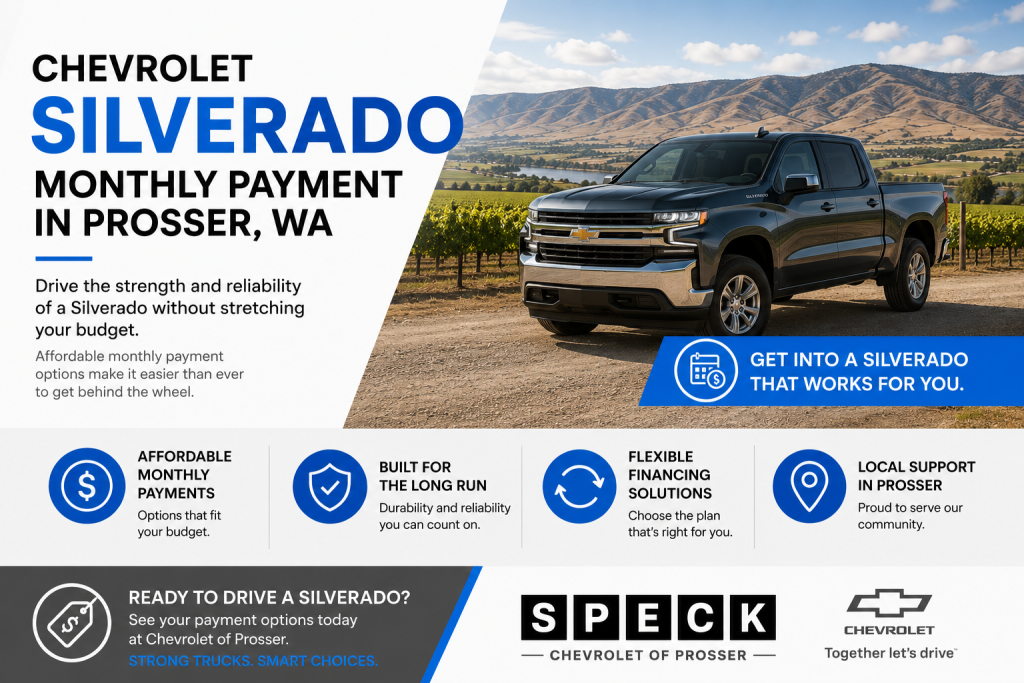
Financing vs. Leasing — Which Is Right for You?
Chevrolet Silverado financing lets you build equity and own your truck outright. It’s the better fit for high-mileage drivers who plan to keep their truck long term. Prefer a lower monthly payment? A Chevrolet Silverado lease payment is often significantly lower than financing. With a lease, you only pay for the portion of the truck you use. It’s a great option if you like to upgrade every few years.
Not sure which is right for you? Our finance team is happy to run both scenarios side by side so you can see exactly what each looks like for your budget.
Build Your Payment Online Right Now
Every Silverado listing on our website includes a “Personalize Payment” button — our built-in truck payment calculator. Here’s how it works:
- Browse our current Silverado inventory online
- Click “Personalize Payment” on any listing
- Enter your down payment and trade-in information
- Choose between Chevrolet Silverado financing or leasing
- Watch your estimated monthly payment update in real time
No pressure, no surprises — just a clear picture of what your new Silverado could cost each month, right from your phone or computer.
Come See Us in Prosser
Chevrolet Silverado incentives are updated every month — and right now there are strong deals available for Prosser and Yakima Valley buyers. Stop by Speck Chevrolet of Prosser, browse our inventory online, or use the “Personalize Payment” tool to start building your deal today. Our team is here to help — no runaround, no markup, no pressure.
The information provided is for general informational purposes only and does not constitute legal, financial, or professional advice. While we strive to provide accurate and up-to-date information, we make no guarantees regarding the completeness, accuracy, or reliability of the information presented. Any action you take based on the context of this blog is strictly at your own risk. Always consult a qualified professional or specialist for advice specific to your situation. We are not responsible for any losses or damages arising from the use of this blog or its content.
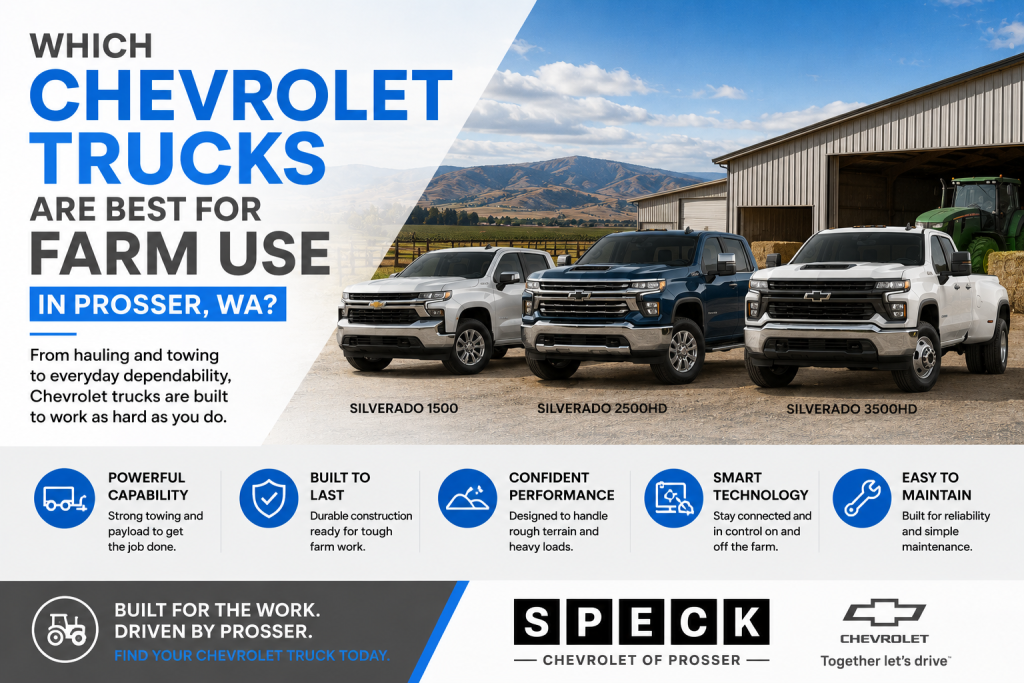
Whether you’re pulling irrigation equipment through a Benton County vineyard, hauling hay across the Horse Heaven Hills, or moving livestock trailers through the Yakima Valley, the right farm truck makes every job more manageable. The Chevrolet Silverado lineup covers every scale of agricultural work — from the versatile 1500 for everyday ranch driving all the way up to the 3500 HD for the heaviest commercial hauling. Here’s a straightforward comparison of Chevy truck towing and payload for farm use to help you find the right fit.
Silverado Towing & Payload Comparison
Understanding the difference between towing and payload is essential for farm work. Towing capacity is how much you can pull behind the truck on a trailer. Payload capacity is how much weight you can carry in the bed and cab combined. Both numbers matter — and they vary significantly across the Silverado lineup.
| Model | Max Towing | Max Payload | Top Engine |
|---|---|---|---|
| Silverado 1500 | 13,300 lbs | 2,260 lbs | 6.2L V8 (towing) · 2.7L TurboMax (payload) |
| Silverado 2500 HD | 22,070 lbs (diesel) | 3,689 lbs (gas) | 6.6L Duramax Turbo Diesel or 6.6L Gas V8 |
| Silverado 3500 HD (SRW) | 27,000 lbs (diesel) | 4,534 lbs (gas) | 6.6L Duramax Turbo Diesel or 6.6L Gas V8 |
| Silverado 3500 HD (Dually) | 36,000 lbs (diesel, gooseneck) | 7,234 lbs (gas) | 6.6L Duramax Turbo Diesel or 6.6L Gas V8 |
*All figures are for 2025 models when properly equipped. Final ratings vary by cab, bed, engine, drivetrain, and optional packages. Always verify on the door jamb sticker.
Silverado 1500 Best for Everyday Ranch Work
Half-Ton · Best All-Around Farm Daily Driver
Max Towing: 13,300 lbs Max Payload: 2,260 lbs Engines: 2.7L TurboMax · 5.3L V8 · 6.2L V8 · 3.0L Duramax Diesel Bed Options: 5’8″ · 6’6″ · 8’2″
For most Yakima Valley farmers and ranchers, the Silverado 1500 is the right everyday truck. It handles the vast majority of daily farm tasks — pulling horse trailers, hauling feed and supplies, moving ATVs or equipment to the field — all while being comfortable enough to drive to town or take the family on the weekend. The available 3.0L Duramax turbo diesel option extends fuel efficiency on long work days, and the Work Truck (WT) trim keeps it job-ready at a lower price point.
- ✓13,300 lbs towing — covers horse trailers, livestock trailers, and mid-size equipment loads
- ✓Available 8’2″ long bed for hay bales, tools, and bulk farm supplies
- ✓Work Truck (WT) trim — durable vinyl floors, tow package, 4WD, built for the job
- ✓Duramax 3.0L turbo diesel available for best fuel economy on high-mileage farm days
- ✓Up to 15 camera views including hitch guidance — makes solo hitching easier on the farm
- ✓Rides comfortably on paved roads and rough ranch terrain alike
Best ranch use: Everyday vineyard, livestock, and mixed-use farm operations in the Prosser and Yakima Valley area where loads typically stay under 13,000 lbs and the truck also doubles as a daily driver.
Silverado 1500 vs. 2500 HD — Which Is Right for Your Farm?
This is the most common question we hear from Yakima Valley farmers. The short answer: if your loads and trailers regularly push 10,000 lbs or more, or if you use a fifth-wheel or gooseneck setup, the 2500 HD is the right call. Here’s how they compare for common farm tasks:
| Farm Task | Silverado 1500 | Silverado 2500 HD |
|---|---|---|
| 2-horse trailer | ✓ Handles easily | ✓ Handles easily |
| 4–6 horse trailer (loaded) | ⚠ Near limit | ✓ Comfortable |
| Small farm equipment trailer | ✓ Handles easily | ✓ Handles easily |
| Full livestock/cattle trailer | ⚠ Near limit | ✓ Comfortable |
| Large gooseneck equipment trailer | ✗ Exceeds rating | ✓ Built for it |
| Daily farm driving & errands | ✓ More comfortable | Good but firmer ride |
Silverado 2500 HD Best for Heavy Farm Hauling
Heavy-Duty Half · The Step-Up for Serious Farm Work
Max Towing: 22,070 lbs (diesel) Max Payload: 3,689 lbs (gas) Engines: 6.6L Gas V8 · 6.6L Duramax Turbo Diesel Gooseneck/5th-Wheel: Available
When the farm work is consistently heavy, the 2500 HD is the right investment. With up to 22,070 lbs of diesel towing and nearly 3,700 lbs of payload capacity, it handles large livestock trailers, heavy equipment hauls, and loaded flatbeds that push the limits of a half-ton. The available Duramax 6.6L V8 diesel delivers massive torque for pulling loaded trailers across the grades and grades between Prosser, the Rattlesnake Hills, and beyond. Available fifth-wheel and gooseneck prep makes it the go-to for serious farm trailer configurations.
- ✓22,070 lbs diesel towing — covers large livestock, equipment, and loaded flatbed trailers
- ✓Factory fifth-wheel and gooseneck hitch prep — bed-stamped holes ready for farm trailer setups
- ✓Nearly double the payload of the 1500 — almost two tons in the bed
- ✓Commercial-grade chassis built to sustain daily heavy-duty use season after season
- ✓Available ZR2 trim for farms with challenging terrain, steep access roads, or muddy conditions
Best ranch use: Mid-to-large farm and ranch operations in the Yakima Valley that regularly haul cattle, large equipment, or heavy gooseneck loads — where the 1500 is simply not enough truck for the job.
Silverado 3500 HD Maximum Farm Capability
Heavy-Duty · SRW or Dually · For the Biggest Farm Operations
Max Towing (Dually): 36,000 lbs gooseneck Max Payload (Dually): 7,234 lbs Engines: 6.6L Gas V8 · 6.6L Duramax Turbo Diesel
For the largest-scale farming operations in the Prosser and Benton County area, the 3500 HD is in a class of its own. The dually configuration adds a second set of rear wheels for maximum stability and the highest towing and payload numbers available in the Chevy truck lineup. If your operation involves moving heavy commercial farm equipment, pulling a fully loaded gooseneck on a regular basis, or hauling volumes that make the 2500 HD feel stretched, the 3500 HD is the truck to spec out.
- ✓36,000 lbs gooseneck towing (dually, diesel) — maximum capability for commercial farm equipment transport
- ✓7,234 lbs payload in dually — over 3.5 tons in the bed
- ✓Dual rear wheels add stability for heavy loads on winding Yakima Valley roads
- ✓Commercial-grade construction for sustained maximum-load use
Best ranch use: Large commercial farming operations, heavy equipment transport, and any situation where loads are consistently at or beyond the limits of the 2500 HD.
Quick decision guide for Yakima Valley farmers
Day-to-day ranch driving with occasional trailer pulls → Silverado 1500. Regular heavy livestock or equipment hauling → Silverado 2500 HD. Commercial-scale gooseneck and maximum loads → Silverado 3500 HD. Stop by Speck Chevrolet in Prosser and our team will help you match the right truck to your operation.
The information provided is for general informational purposes only and does not constitute legal, financial, or professional advice. While we strive to provide accurate and up-to-date information, we make no guarantees regarding the completeness, accuracy, or reliability of the information presented. Any action you take based on the context of this blog is strictly at your own risk. Always consult a qualified professional or specialist for advice specific to your situation. We are not responsible for any losses or damages arising from the use of this blog or its content.
Summer in the Yakima Valley is no joke. With temperatures regularly hitting the 90s and 100s across Prosser and the surrounding area, your vehicle works harder than any other time of year. A little preventive maintenance before the heat peaks goes a long way toward keeping you safe, comfortable, and worry-free all summer long. Here are the most important summer car care tips and services our team at Speck Chevrolet of Prosser recommends before the temperatures climb.
Top Summer Car Care Services
Oil Change Service in Prosser, WA
A fresh oil change is one of the most important things you can do heading into summer. Motor oil breaks down faster in extreme heat — losing its ability to properly lubricate your engine when it needs protection most. If you’re due for an oil change service in Prosser, WA — or getting close — don’t put it off heading into the hottest months. Fresh oil keeps your engine running cooler and more efficiently on long, hot drives across the Yakima Valley. Our service team at Speck Chevrolet of Prosser offers same-day oil change appointments — no long waits, no runaround.
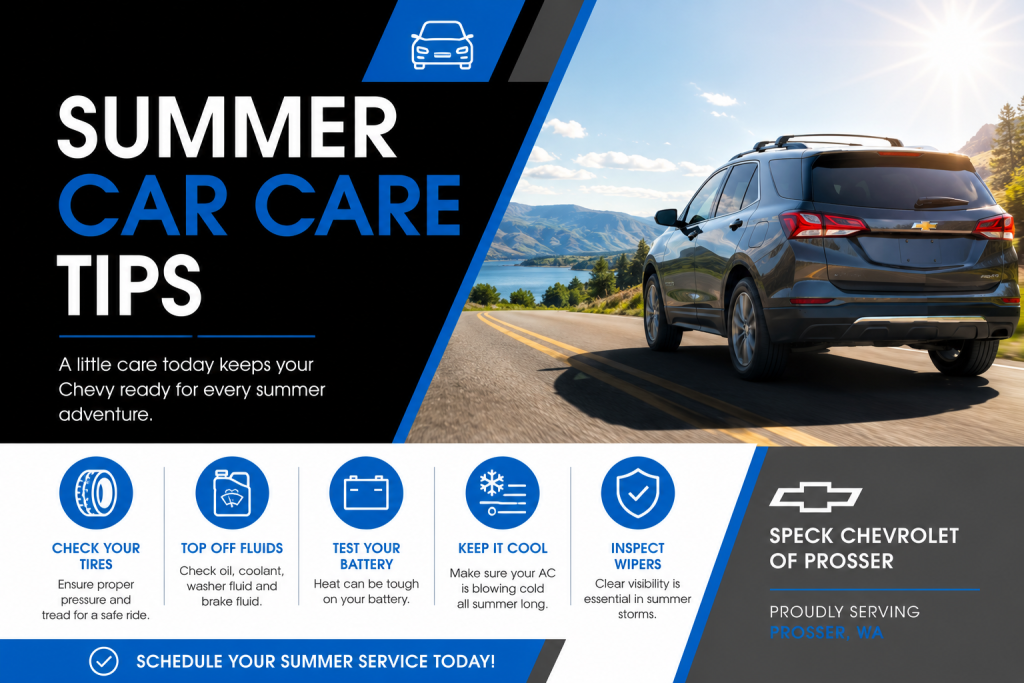
Summer Tires & Tire Inspection
Heat is one of the biggest enemies of tire health. As pavement temperatures rise — Eastern Washington roads get extremely hot in July and August — tire pressure increases and worn tread becomes a real safety risk. Before summer road trips, our team recommends:
- Checking tire pressure when tires are cold — heat causes pressure to rise, so always check before driving
- Inspecting tread depth — the legal minimum is 2/32″ but 4/32″ or more is recommended for safe highway driving
- Looking for sidewall cracking or bulging — a sign of internal damage that needs immediate attention
- Considering summer tires if you drive aggressively or want maximum dry-weather performance
Summer tires are engineered specifically for warm weather performance — offering superior grip, handling, and braking on hot, dry pavement compared to all-season tires. Ask our team whether summer tires are the right choice for your driving style and vehicle.
Cooling System Service
Your cooling system is your engine’s first line of defense against summer heat. Low or degraded coolant can lead to overheating — one of the most common and costly summer breakdowns. Our summer service recommendation includes:
- Checking coolant level and condition
- Inspecting hoses and belts for cracks or wear
- Pressure testing the cooling system if your vehicle is older or high-mileage
Don’t wait until your temperature gauge climbs into the red. A cooling system check before summer is fast, affordable, and could save you from a costly roadside breakdown.
Battery Test
Most drivers associate dead batteries with winter — but summer heat is actually harder on batteries than cold weather. High temperatures accelerate the chemical breakdown inside a battery and can cause it to fail without warning. If your battery is more than three years old, have it tested before the heat sets in. Our service team can test your battery’s charge and cranking power quickly during your next visit.
A/C System Service
A struggling A/C isn’t just uncomfortable — it can signal a refrigerant leak or a failing compressor. If your air isn’t blowing as cold as it used to, or takes a while to cool the cabin, have your A/C inspected and recharged before summer peaks. Yakima Valley heat is no time to discover your A/C is out on a 105°F afternoon.
Brake Inspection
Planning any summer road trips through mountain passes or hilly terrain? Your brakes deserve a look before you go. Worn brake pads or low brake fluid can put you in a dangerous situation on a long downhill stretch. Our service team can inspect brake pad thickness and overall brake system health quickly during your visit.
Fluid Top-Off
Summer heat affects more than just your coolant. Our summer service checklist includes checking and topping off:
- Windshield washer fluid
- Brake fluid
- Power steering fluid
- Transmission fluid
Keeping all fluids at proper levels ensures every system operates as it should during the hottest months.
Wiper Blade Replacement
Summer storms in Eastern Washington can pop up fast. Worn wiper blades streak and skip — making it hard to see clearly when you need to most. Wiper blades are quick and inexpensive to replace — an easy win for summer safety.
Extra Summer Car Care Tips
Beyond scheduled service, a few simple habits can make a big difference all summer long:
- Park in the shade — reduces interior temps and protects your dashboard and upholstery from UV damage
- Use a windshield sunshade — drops interior temps by 15–20°F and protects your steering wheel
- Keep an emergency kit in your vehicle — water, jumper cables, a first aid kit, and a phone charger are summer road trip essentials
- Never leave pets or children in the car — temperatures inside a parked car can exceed 140°F on hot days. Not even a few minutes is safe.
Schedule Your Summer Service at Speck Chevrolet of Prosser
Don’t wait until something goes wrong. Our service team at Speck Chevrolet of Prosser is here to get your vehicle summer-ready — from oil change service in Prosser, WA to tire inspections, A/C service, battery tests, and more. Same-day appointments are available, and our local shuttle means you don’t have to wait at the dealership while we work.
Schedule your summer service appointment online or stop by — we’ll get you in, get you out, and get you back on the road with confidence this summer.
The information provided is for general informational purposes only and does not constitute legal, financial, or professional advice. While we strive to provide accurate and up-to-date information, we make no guarantees regarding the completeness, accuracy, or reliability of the information presented. Any action you take based on the context of this blog is strictly at your own risk. Always consult a qualified professional or specialist for advice specific to your situation. We are not responsible for any losses or damages arising from the use of this blog or its content.
If you’ve been searching for a Chevy oil change near Prosser, WA, look no further than Speck Chevrolet of Prosser. We offer fast, affordable Chevrolet oil change service with same-day appointments, short turnaround times, and a local shuttle for customers who can’t wait. No weeks-long waits — just quality service done right.
Same-Day Appointments — No Weeks of Waiting
One of the biggest frustrations drivers face at other Chevrolet dealerships in Washington State is the wait. Booking days or weeks out for a routine oil change shouldn’t be the norm. At Speck Chevrolet of Prosser, same-day appointments are available for oil changes based on current availability. Call us, schedule online, or simply stop by — our team works hard to get you in and out as quickly as possible.
Typical Oil Change Turnaround Times
We respect your time — and we show it:
- Conventional or Synthetic Blend — Approximately 60 minutes
- Best Synthetic Oil Change (Full Synthetic) — Approximately 60 minutes
- Oil Change + Multi-Point Inspection — Approximately 60 minutes
We communicate openly and keep you updated every step of the way. No surprises, no unexplained waits.
Our Service Hours
🕗 Service Department Hours:
Monday – Friday: 7:30 AM – 5:30 PM
Saturday: 7:30 AM – 4:30 PM
Sunday: Closed
Hours may vary around holidays — check our website or call ahead to confirm.
We recommend arriving early for the fastest same-day turnaround. Early drop-offs are welcome and our team gets started right away.
Local Shuttle Service Available
Can’t wait at the dealership? No problem. We offer a local shuttle service for Prosser area customers — drop your vehicle off, get a ride to work or home, and we’ll let you know when your Chevy is ready. Simply let our service team know when you arrive and we’ll arrange your ride.
Best Synthetic Oil Change — Why It Matters
Choosing the right oil for your Chevrolet makes a real difference. Here’s a quick breakdown:
Conventional Oil — Best for older vehicles or lower mileage models. Changed every 3,000–5,000 miles.
Synthetic Blend — Better protection than conventional at a moderate price. A solid middle-ground for many Chevy models.
Full Synthetic — The best synthetic oil change option. Resists breakdown longer, flows better in cold weather, and protects your engine in Eastern Washington’s extreme summer heat. Most modern Chevrolets recommend full synthetic, with intervals of 7,500–10,000 miles.
Not sure which oil your Chevrolet needs? Our certified technicians will recommend the right type for your specific model — no upselling, just the right answer.
What’s Included With Your Chevy Oil Change?
Every Chevy oil change at a Chevrolet dealership includes:
- ✓ Oil and filter replacement with GM-approved OEM fluids
- ✓ Multi-point vehicle inspection
- ✓ Tire pressure check
- ✓ Fluid level check — coolant, brake, power steering & washer fluid
- ✓ Visual brake inspection
- ✓ Digital inspection report sent to your phone or email
Schedule Your Chevy Oil Change Today
Ready to book your Chevrolet oil change in Washington State? Here’s how:
- Online — Visit our website and click “Schedule Service”
- By Phone — Call our service department directly
Don’t put off your next Chevy oil change. Stop by Speck Chevrolet of Prosser and let our team take care of you — fast, affordable, and done right.
The information provided is for general informational purposes only and does not constitute legal, financial, or professional advice. While we strive to provide accurate and up-to-date information, we make no guarantees regarding the completeness, accuracy, or reliability of the information presented. Any action you take based on the context of this blog is strictly at your own risk. Always consult a qualified professional or specialist for advice specific to your situation. We are not responsible for any losses or damages arising from the use of this blog or its content.
Whether you’re commuting across Prosser, making the long haul to the Oregon Coast, or running a full crew of passengers through the Yakima Valley, comfort matters. The good news: Chevrolet’s SUV lineup covers a wide range of comfort levels — from the efficient, refined Equinox all the way up to the whisper-quiet, luxury-grade Suburban. Here’s a ranked breakdown of each model’s Chevrolet SUV comfort features, so you can match the right vehicle to the way you drive.
Quick Comfort Comparison
| Model | Seating | Heated Seats | Ventilated Seats | Noise Control | Seating Material |
|---|---|---|---|---|---|
| Suburban | Up to 9 | ✓ Std (LT+) | Avail (Premier+) | Acoustic glass + Magnetic Ride Control | Leather (LT+) · Perforated Leather (High Country) |
| Tahoe | Up to 9 | ✓ Std (LT+) | Avail (Premier+) | Acoustic glass + available Magnetic Ride | Leather (LT+) · Perforated Leather (High Country) |
| Traverse | Up to 8 | ✓ Std (LT+) | Avail (High Country) | Well-insulated cabin, smooth ride | Cloth (LT) · Leather (Z71, RS, High Country) |
| Blazer | 5 | ✓ Std on most trims | Avail (RS, Premier) | Active noise cancellation standard | Cloth (2LT) · Leather/suede inserts (RS, Premier) |
| Equinox | 5 | Avail (LT+) | Avail (RS) | Composed, quiet for its class | Cloth (LS/LT) · EVOTEX/Leather (RS, ACTIV) |
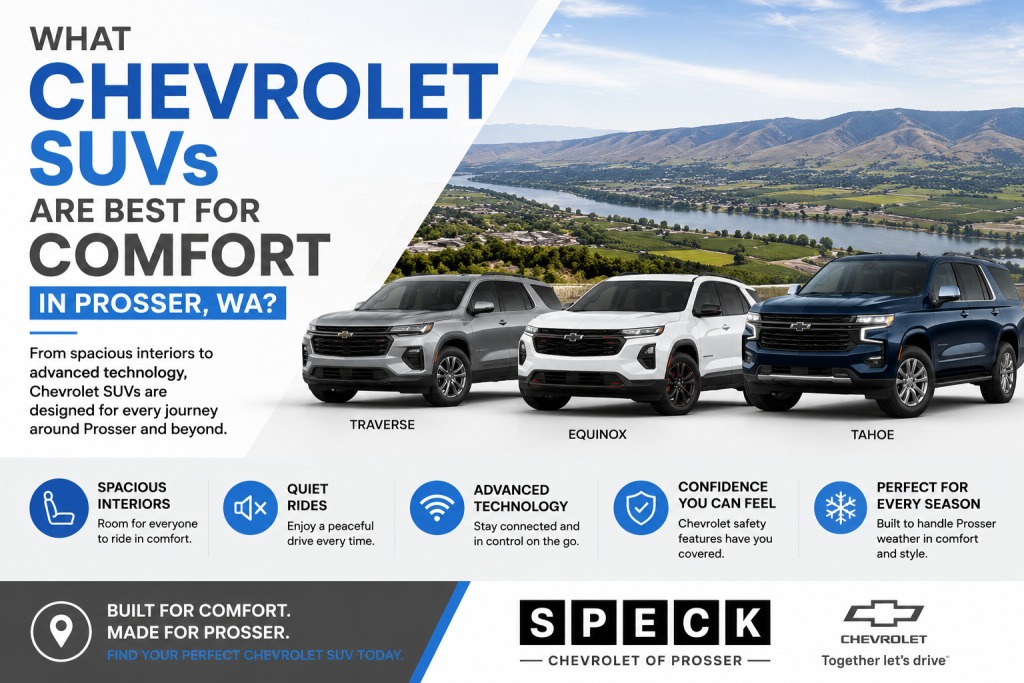
1. Chevrolet Suburban: Most Comfortable
Full-Size 3-Row · Up to 9 Passengers · The Flagship
The Suburban is the undisputed comfort champion of the Chevrolet lineup. As the longest-running nameplate in automotive history, it has evolved into a true luxury SUV — with available Magnetic Ride Control that continuously adjusts the suspension to road conditions, acoustic laminated glass, and extensive sound insulation that makes the cabin whisper-quiet even at highway speeds on I-82.
| Seating Capacity | Up to 9 (bench) · 7 (captain’s chairs) |
| Heated Seats | Standard from LT trim upward — front and second row |
| Ventilated Seats | Available on Premier and High Country |
| Power Seats | Power-adjustable driver’s seat standard; memory settings available |
| Seating Material | Leather-appointed (LT+) · Perforated leather with real wood décor (High Country) |
| Noise Control | Acoustic laminated glass, extensive sound insulation, available Magnetic Ride Control suspension |
| Climate Control | Tri-zone automatic climate control standard |
| Bonus Comfort Feature | Available Four-Corner Air Ride Adaptive Suspension, 17.7″ infotainment screen, available 15″ HUD |
Best for: Long road trips, large families, and drivers who want a genuinely luxury-level quiet ride. The best Chevrolet SUV for road comfort and a quiet ride — nothing in the lineup beats the Suburban for isolation and refinement.
2. Chevrolet Tahoe: Runner-Up
Full-Size 3-Row · Up to 9 Passengers · Commanding & Refined
The Tahoe delivers nearly everything the Suburban does in a slightly shorter package — the same full-size ride, available Magnetic Ride Control, and premium interior options — making it the most comfortable option for buyers who want full-size luxury without the Suburban’s length. The 2025 update brought a significant interior overhaul including the same class-leading 17.7″ touchscreen as the Suburban.
| Seating Capacity | Up to 9 (bench) · 7 or 8 (captain’s chairs) |
| Heated Seats | Standard from LT trim — front and available second row |
| Ventilated Seats | Available on Premier and High Country |
| Power Seats | Power-adjustable driver’s seat standard; available memory settings |
| Seating Material | Leather (LT+) · Perforated leather with premium stitching (High Country) |
| Noise Control | Available acoustic glass, available Magnetic Ride Control for optimized suspension |
| Climate Control | Tri-zone automatic climate control |
| Bonus Comfort Feature | 44.5″ front legroom, 42″ second-row legroom, 34.9″ third-row legroom — genuinely spacious in every row |
Best for: Large families who want full-size Suburban-level comfort but prefer a more manageable footprint for Prosser and Tri-Cities area driving.
3. Chevrolet Traverse Three-Row Value Comfort
Midsize 3-Row · Up to 8 Passengers · Smooth & Spacious
The Traverse punches well above its price point for comfort. A smooth, well-damped ride, a refined cabin with available leather seating, and strong noise insulation make it a genuinely comfortable long-distance vehicle — and at a significantly lower price than the Tahoe or Suburban. It’s the most family-friendly three-row option in the lineup for buyers on a more moderate budget.
| Seating Capacity | Up to 8 |
| Heated Seats | Available LT+; standard on Z71, RS, and High Country |
| Ventilated Seats | Available on High Country |
| Power Seats | 8-way power driver’s seat on RS and above; available on lower trims |
| Seating Material | Cloth (LT) · Leather-appointed (Z71, RS) · Premium leather (High Country) |
| Noise Control | Well-insulated cabin; smooth highway ride; quieter than most midsize competitors |
| Climate Control | Dual-zone standard; tri-zone available on higher trims |
| Bonus Comfort Feature | 17.7″ touchscreen, available rear-seat entertainment, best-in-class cargo space (98.2 cu ft) |
Best for: Families who want three-row comfort without the full-size price tag — a smooth, quiet ride and a genuinely premium feel at an accessible price point.
4. Chevrolet Blazer Best Sport-Comfort Balance
Midsize 2-Row · 5 Passengers · Sporty & Refined
The Blazer takes a sportier approach to comfort — it’s not the biggest or the softest, but it’s genuinely well-insulated and refined. Active noise cancellation comes standard, the seats are well-bolstered and supportive for long drives, and available leather with suede inserts makes higher trims feel premium. For two-row buyers who want comfort plus style, the Blazer is the pick.
| Seating Capacity | 5 passengers |
| Heated Seats | Standard on most trims — front; rear available |
| Ventilated Seats | Available on RS and Premier trims |
| Power Seats | 8-way power driver’s seat standard; front passenger power-adjustable on 3LT+ |
| Seating Material | Cloth (2LT) · Perforated leather (3LT, RS) · Leather with Maple Sugar suede inserts (Premier) |
| Noise Control | Active noise cancellation standard — one of its standout comfort features |
| Climate Control | Dual-zone standard; tri-zone available on higher trims |
| Bonus Comfort Feature | 41″ front legroom, 39.6″ rear legroom; available Bose 8-speaker audio; ambient interior lighting |
Best for: Drivers who want a sporty, stylish two-row SUV with strong comfort credentials — active noise cancellation and available premium seating make it a genuinely relaxing daily driver.
5. Chevrolet Equinox Best Entry-Level Comfort
Compact 2-Row · 5 Passengers · Efficient & Comfortable
The Equinox is the most affordable entry point into the Chevrolet SUV lineup — and it’s more comfortable than its price point suggests. A well-composed suspension delivers a smooth, quiet ride for a compact SUV, and available heated seats, leather-like EVOTEX seating, and Google-powered infotainment keep the cabin feeling modern and refined. It won’t match the Blazer or Traverse for outright comfort, but it punches above its class for everyday driving.
| Seating Capacity | 5 passengers |
| Heated Seats | Available from LT trim upward |
| Ventilated Seats | Available on RS trim |
| Power Seats | Available power driver’s seat on LT and above |
| Seating Material | Cloth (LS/LT) · EVOTEX faux-leather or sueded microfiber (RS, ACTIV) |
| Noise Control | Composed, quiet cabin for its class — well above average for a compact SUV |
| Climate Control | Dual-zone automatic climate control |
| Bonus Comfort Feature | 11.3″ Google touchscreen, wireless CarPlay, efficient 1.5L turbo engine |
Best for: Solo drivers, couples, or small families who want a comfortable, efficient compact SUV at the most accessible price point in the Chevrolet lineup.
Come experience the comfort difference in person.
The best way to find your perfect Chevrolet SUV is to sit in each one. Stop by Speck Chevrolet in Prosser — we’re happy to walk you through the lineup, let you feel the seat difference between a Blazer and a Traverse, and find the right level of comfort for your drives through the Yakima Valley and beyond.
The information provided is for general informational purposes only and does not constitute legal, financial, or professional advice. While we strive to provide accurate and up-to-date information, we make no guarantees regarding the completeness, accuracy, or reliability of the information presented. Any action you take based on the context of this blog is strictly at your own risk. Always consult a qualified professional or specialist for advice specific to your situation. We are not responsible for any losses or damages arising from the use of this blog or its content.
Summer in the Yakima Valley means road trips — whether you’re heading to the Oregon Coast, crossing the Cascades, or cruising down to the Columbia River Gorge. Before you load up the car and hit the highway, these summer tire safety tips for Yakima Valley drivers could be the most important thing you read before you go. Hot pavement, long distances, and heavy loads all put extra stress on your tires in summer, and a few minutes of inspection before you leave can save you from a blowout, poor fuel economy, or a dangerous situation miles from home. Here’s what to check — and how Speck Chevrolet of Prosser can help make sure you’re good to go.
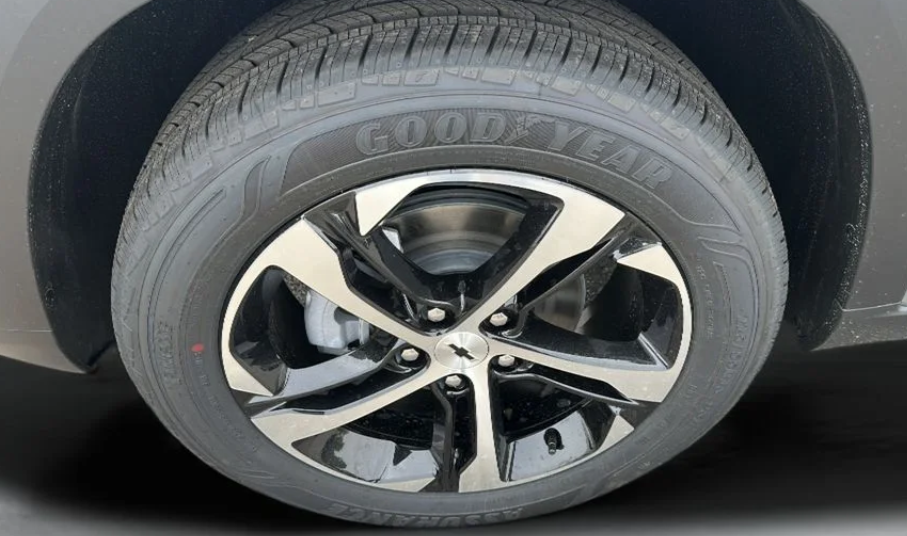
Why Summer Is Hard on Tires
Heat is one of the biggest enemies of tire health. As pavement temperatures rise — Eastern Washington roads can get extremely hot in July and August — tire pressure increases, rubber softens, and worn tread becomes a real safety risk. Add a full load of passengers and gear, and the demands on your tires go up even further. The good news is that a basic pre-trip tire inspection takes less than 10 minutes and can make a significant difference in safety and fuel efficiency.
Your Summer Tire Checklist
- ✓Check Tire Pressure — Tire pressure fluctuates with temperature — roughly 1 PSI for every 10°F change. Hot summer weather can cause tires to over-inflate, which reduces the contact patch and can lead to uneven wear or a blowout. Check your pressure when the tires are cold (before driving) and inflate to the recommended PSI listed on the sticker inside your driver’s door — not the number on the tire sidewall.
- ✓Inspect Tread Depth — Worn tread means reduced traction, especially if you hit any summer rain. The legal minimum is 2/32″, but for safe summer driving — especially at highway speeds — 4/32″ or more is recommended. A quick check: insert a quarter into a tread groove with Washington’s head pointing down. If you can see the top of his head, it’s time for new tires.
- ✓Look for Sidewall Damage — Walk around your vehicle and inspect the sidewalls of each tire for cracks, bulges, or bubbles. A bulge in the sidewall is a sign of internal damage and means the tire could fail at any moment — especially under highway load and heat. Don’t road trip on a bulging tire.
- ✓Check for Uneven Wear — Uneven tread wear is often a sign of alignment or suspension issues. If the inner or outer edges of your tire are wearing faster than the center, or vice versa, it’s worth having your alignment and tire rotation checked before a long drive.
- ✓Don’t Forget the Spare — A spare that’s flat or cracked won’t help you if you get a roadside flat on Highway 12 or I-82. Check your spare’s pressure and condition before every road trip.
Quick Summer Tire Tips
Check pressure in the morning
Always check tire pressure when tires are cold — before you’ve driven more than a mile or two — for the most accurate reading.
Don’t overload your vehicle
Every vehicle has a max load rating. Exceeding it in summer heat dramatically increases the risk of a blowout.
Rotate every 5,000–7,500 miles
Regular rotation extends tire life and ensures even wear across all four tires — especially important heading into a heavy-use summer.
Watch for vibration while driving
Vibration or pulling to one side while driving is often a sign of alignment, balance, or tire issues. Get it checked before a long trip.
Let Speck Chevrolet of Prosser get you road trip ready.
Our service team can inspect your tires, check your alignment, rotate and balance, and make sure your vehicle is in top shape before you hit the road this summer. We serve drivers from Prosser, Sunnyside, and across the Tri-Cities and Yakima Valley. Schedule your summer service appointment online or stop by — we’ll get you out the door and on your way.
The information provided is for general informational purposes only and does not constitute legal, financial, or professional advice. While we strive to provide accurate and up-to-date information, we make no guarantees regarding the completeness, accuracy, or reliability of the information presented. Any action you take based on the context of this blog is strictly at your own risk. Always consult a qualified professional or specialist for advice specific to your situation. We are not responsible for any losses or damages arising from the use of this blog or its content.
Chevrolet Incentives
If you’re in the market for a new Chevrolet, there’s a good chance you qualify for more savings than you realize. Chevrolet incentives are updated every month and can include cash discounts, special APR offers, and lease deals across a wide range of models. At Speck Chevrolet of Prosser, we stay on top of the latest offers so you don’t have to. Check out our Special Offers page to see what’s available right now.
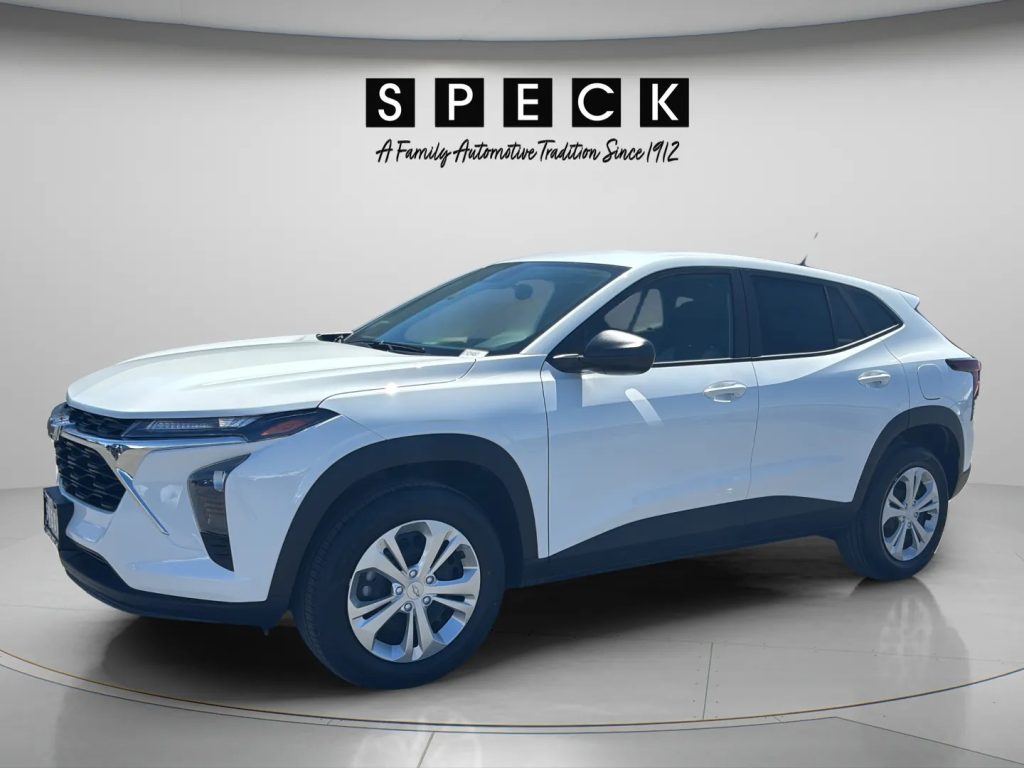
What Kind of Chevrolet Incentives Are Available?
Chevrolet incentives vary by model and month, but they typically fall into a few categories. Cash discounts reduce the purchase price of the vehicle upfront. Special APR offers give qualified buyers a lower interest rate over the life of the loan. Lease specials provide an affordable monthly payment option for drivers who prefer to drive a new vehicle every few years. Whether you’re looking at Chevrolet car incentives, Chevrolet truck incentives, or Chevrolet Silverado incentives specifically, there are often meaningful savings available depending on the time of year and your situation.
GM First Responder Discount
Chevrolet proudly recognizes the men and women who serve our communities every day. The GM First Responder Discount is available to police officers, firefighters, EMTs, paramedics, and other eligible first responders. This exclusive offer provides additional savings on top of other applicable incentives. If you serve your community, Speck Chevrolet of Prosser is proud to give back to you. Contact us to learn more about eligibility and current discount amounts.
GM Military Discount
Chevrolet honors the sacrifice and service of our military members with the GM Military Discount program. This offer is available to active duty members, veterans, retirees, and eligible family members. It can be combined with many current Chevrolet incentives, making it one of the best ways to maximize your savings on a new vehicle. We are grateful for your service and we look forward to helping you find the right vehicle at the right price.
Chevrolet Educator Program
Teachers and educators dedicate their lives to shaping the next generation, and Chevrolet recognizes that commitment. The Chevrolet Educator Program offers exclusive savings for eligible K-12 teachers, administrators, and other education professionals. It’s Chevrolet’s way of saying thank you to those who give so much to our communities every day. Ask our team at Speck Chevrolet of Prosser about how to take advantage of this program.
Final Thoughts
Chevrolet incentives change monthly, so the best time to buy is always worth a closer look. Whether you’re after a car, SUV, or truck, there are often deals available that can make a real difference in your monthly payment or purchase price. Browse our New Specials page or explore our full New Inventory to find your next Chevrolet. Our team is here to help you get the most out of every available offer.
The information provided is for general informational purposes only and does not constitute legal, financial, or professional advice. While we strive to provide accurate and up-to-date information, we make no guarantees regarding the completeness, accuracy, or reliability of the information presented. Any action you take based on the context of this blog is strictly at your own risk. Always consult a qualified professional or specialist for advice specific to your situation. We are not responsible for any losses or damages arising from the use of this blog or its content.
Used Cars with Low Mileage for Sale
Shopping for a used vehicle does not mean you have to settle for high miles and unknown history. Used cars with low mileage offer a smart middle ground between buying new and buying a traditional pre-owned vehicle. At Speck Chevrolet of Prosser, we carry a great selection of low-mileage used vehicles to fit a variety of budgets and needs.
You Get More Life Out of the Vehicle
Low mileage means less wear on the engine, transmission, and other major components. A used car with under 30,000 miles still has plenty of life left and may not need major maintenance for years. You get the value of a used price without taking on the risk that comes with a high-mileage vehicle. That is a win on both ends.
Lower Maintenance Costs
Vehicles with fewer miles on the odometer tend to need less immediate maintenance. Brakes, tires, belts, and suspension components all last longer when a vehicle has not been heavily driven. Buying low mileage means you are less likely to face unexpected repair bills shortly after your purchase. That kind of peace of mind is hard to put a price on.
Better Financing and Insurance Rates
Lenders and insurance companies both take mileage into account when determining rates. Used cars with low mileage often qualify for better financing terms than high-mileage alternatives. Insurance premiums can also be lower on vehicles that are newer and less worn. Over time, those savings really add up.
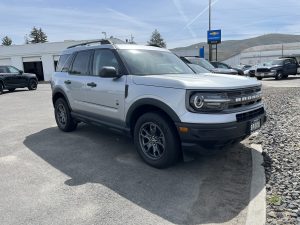
Find Your Next Vehicle at Speck Chevrolet of Prosser
Our team is here to help you find the right used car with low mileage for your lifestyle and budget. We carry a rotating inventory of quality pre-owned vehicles with a range of mileage options. Stop by Speck Chevrolet of Prosser today or browse our current used inventory online.
The information provided is for general informational purposes only and does not constitute legal, financial, or professional advice. While we strive to provide accurate and up-to-date information, we make no guarantees regarding the completeness, accuracy, or reliability of the information presented. Any action you take based on the context of this blog is strictly at your own risk. Always consult a qualified professional or specialist for advice specific to your situation. We are not responsible for any losses or damages arising from the use of this blog or its content.
How often should you I get an oil change?
Regular oil changes are one of the easiest ways to protect your engine and keep your vehicle running smoothly. Modern engines and improved oil technology allow for longer service intervals than in the past. At Speck Chevrolet of Prosser, we help drivers understand the right schedule for their vehicle.

General Oil Change Interval
Most modern vehicles can go between 7,500 and 10,000 miles between oil changes under normal driving conditions. Vehicles using conventional oil or older models may need service closer to 3,000 to 5,000 miles. The best recommendation will always come from your owner’s manual. Following these guidelines helps maintain engine performance and efficiency.
Factors That Can Change Your Schedule
Your driving habits can impact how often you need an oil change. Frequent short trips, heavy traffic, towing, and extreme weather can all cause oil to break down faster. Vehicles driven under these conditions may need more frequent service. Paying attention to how and where you drive can help you adjust your maintenance schedule.
Time-Based Oil Changes
Oil changes are not only based on mileage but also on time. Many vehicles recommend changing the oil every 6 to 12 months. Oil can break down over time even if the vehicle is not driven often. Staying on a time-based schedule helps ensure your engine stays properly protected.

Final Thoughts
Most drivers should plan for an oil change every 7,500 to 10,000 miles or at least once a year. Adjust your schedule based on your driving habits and vehicle type. Visit Speck Chevrolet of Prosser for professional oil change service and expert care. Be sure to see if we have any available service specials!
The information provided is for general informational purposes only and does not constitute legal, financial, or professional advice. While we strive to provide accurate and up-to-date information, we make no guarantees regarding the completeness, accuracy, or reliability of the information presented. Any action you take based on the context of this blog is strictly at your own risk. Always consult a qualified professional or specialist for advice specific to your situation. We are not responsible for any losses or damages arising from the use of this blog or its content.
The 2026 Chevrolet Equinox continues to be a strong choice in the compact SUV market. It offers a balance of comfort, technology, and everyday practicality. Many drivers have questions about what the Equinox offers and how it fits their needs. At Speck Chevrolet of Prosser, we are here to help you learn more.
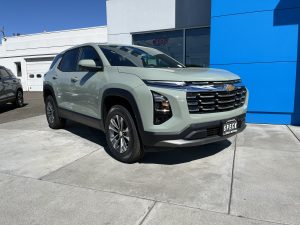
How Long is the Chevy Equinox and How Much Does it Weigh?
The 2026 Chevrolet Equinox measures about 183 inches in length, making it easy to drive and park. It provides a good balance between maneuverability and interior space. The Equinox has a curb weight that typically ranges between about 3,400 and 3,600 pounds depending on the configuration. This helps deliver a stable and comfortable ride.
How Many Seats Are in the Equinox?
The 2026 Chevrolet Equinox offers seating for up to five passengers. Both rows provide comfortable space for daily commuters and longer drives. The interior layout is designed to keep passengers comfortable while still offering practical cargo flexibility.
Is the Chevy Equinox AWD?
The 2026 Chevrolet Equinox comes standard with front-wheel drive for efficient daily driving. All-wheel drive is available for added traction and control in different road conditions. THis makes it a strong option for drivers who want extra confidence in changing weather.
How Much Can the Chevy Equinox Tow?
When properly equipped, the 2026 Chevrolet Equinox can tow up to 1,500 pounds. This makes it capable of handling small trailers, bikes, or light gear. It adds useful versatility for weekend trips and everyday needs.

Final Thoughts
The 2026 Chevrolet Equinox offers a strong mix of comfort, technology, and practicality. It is a reliable option for many types of drivers. Visit Speck Chevrolet of Prosser to explore all available Chevrolet models and check out our available specials.
The information provided is for general informational purposes only and does not constitute legal, financial, or professional advice. While we strive to provide accurate and up-to-date information, we make no guarantees regarding the completeness, accuracy, or reliability of the information presented. Any action you take based on the context of this blog is strictly at your own risk. Always consult a qualified professional or specialist for advice specific to your situation. We are not responsible for any losses or damages arising from the use of this blog or its content.

