




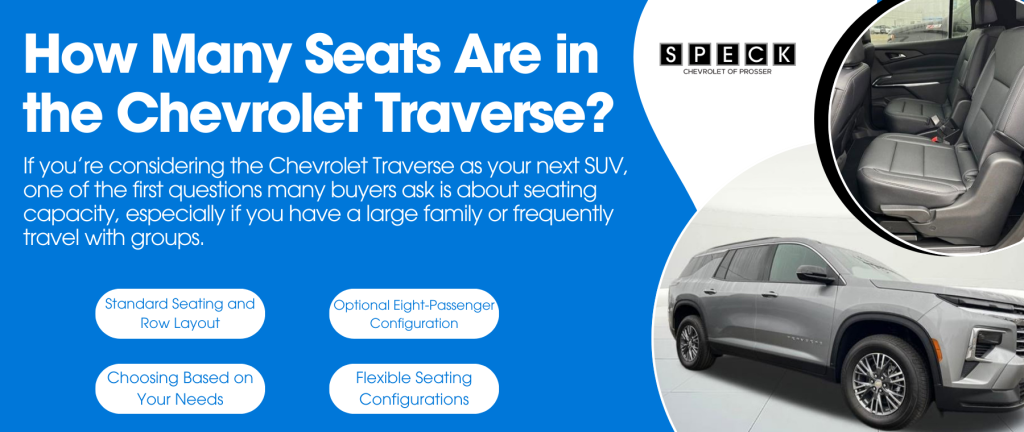
If you’re looking for a new SUV, one of the first questions buyers ask is about seating capacity. If you have a large family or frequently travel with groups, the Traverse offers flexible seating configurations designed to adapt to different needs and lifestyles.
Standard Seating and Row Layout
The Chevrolet Traverse comes with three rows of seats as part of its spacious interior design. In most configurations, it seats seven passengers by default, with two seats in the front row, two in the second row (captain’s chairs), and a three-person bench in the third row. This setup provides comfortable seating for both adults and children, making it a strong choice for family driving.
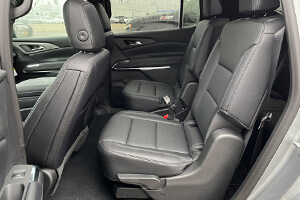
Optional Eight-Passenger Configuration
For those who need even more seating capacity, certain trims offer an optional second-row bench seat instead of captain’s chairs. With this configuration, the Traverse can seat up to eight passengers, two in the front, three in the second row, and three in the third row. This option is especially handy if you regularly transport larger groups or have more passengers than cargo on a typical trip.
Choosing Based on Your Needs
- Seven-Seat Configurations: Most trims come standard with second-row captain’s chairs, which improve individual comfort and ease of access to the third row.
- Eight-Seat Configurations: Available with a second-row bench seat, ideal for maximizing passenger capacity when needed.
Test Drive a Chevy Traverse Today
Whether you need extra room for family, friends, or carpooling, the Chevy Traverse gives you options that make it the leading choice in the three-row SUV segment. Visit Speck Chevrolet of Prosser to explore seating configurations and find the best fit for your lifestyle.
The information provided is for general informational purposes only and does not constitute legal, financial, or professional advice. While we strive to provide accurate and up-to-date information, we make no guarantees regarding the completeness, accuracy, or reliability of the information presented. Any action you take based on the context of this blog is strictly at your own risk. Always consult a qualified professional or specialist for advice specific to your situation. We are not responsible for any losses or damages arising from the use of this blog or its content.

